
For most of the last decade, industrial decarbonisation has meant choosing a technology. A company developed a photovoltaic plant, or signed a PPA with a wind farm, or, less often, did both as two separate, unrelated projects. Each installation was designed, permitted and connected to the grid on its own terms, and each one carried the same structural weakness: it depended on a single weather condition to produce energy.
That model is starting to fall short. As industrial plants electrify more of their processes and rely more heavily on dedicated renewable generation (whether on-site, at a nearby location, or through a corporate PPA) the limits of single-technology installations become harder to ignore. A cloudy week can flatten a solar plant’s output for days. A calm summer can do the same to a wind asset. Hybridization (combining two or more generation technologies, often alongside storage, at a single point of connection) isn’t emerging as a marketing concept, but as a structural response to that exposure.
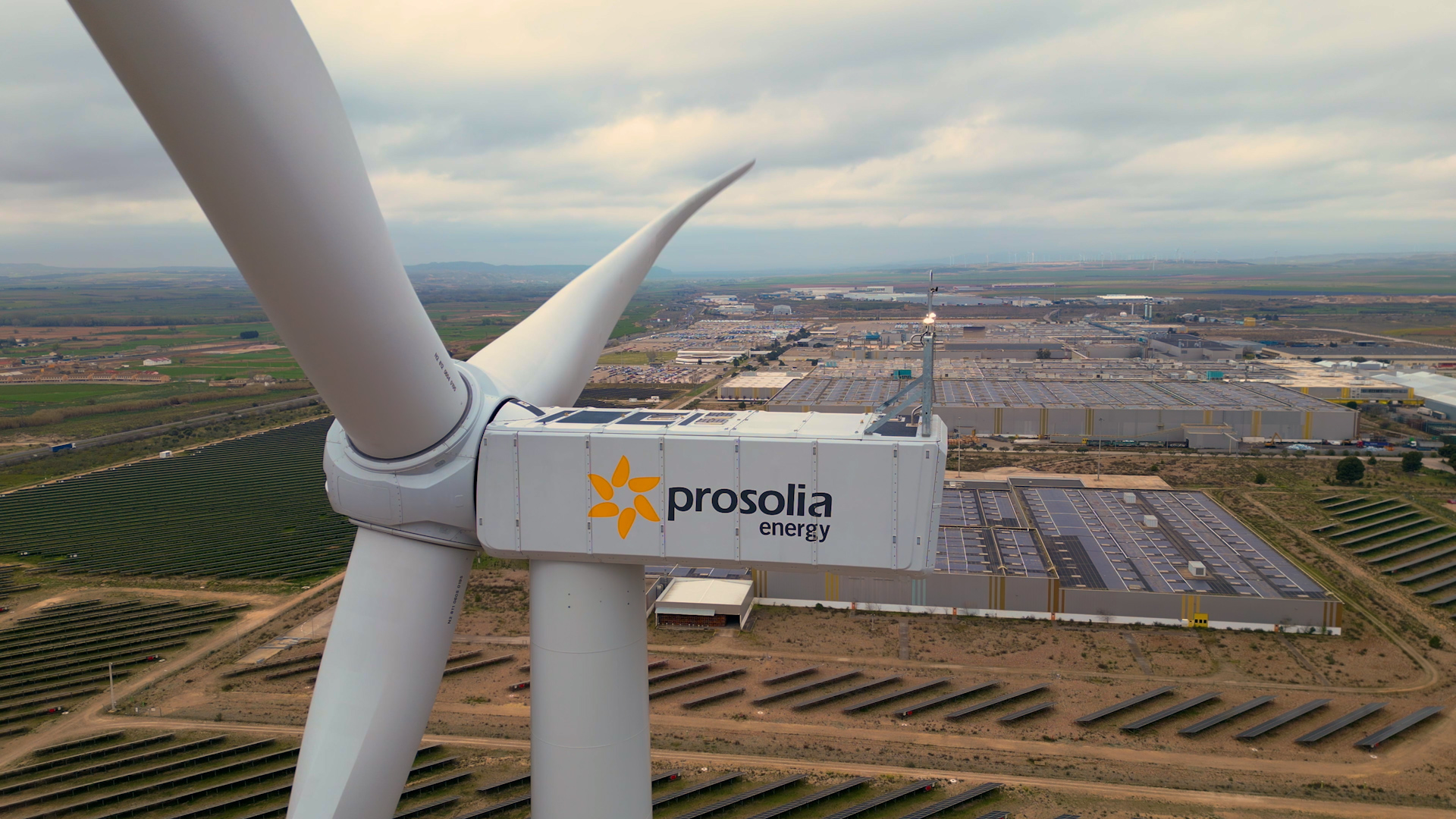
We’re already seeing it in real plants: Prosolia Energy’s first hybrid wind-solar park, developed with Stellantis at its Zaragoza plant, combines photovoltaic and wind generation at a single connection point to give the factory a steadier supply throughout the day.
Hybridization involves more than simply adding technologies together: it changes how generation behaves, what role storage plays, and how grid connection gets planned. Coordinating all of that once a hybrid system is up and running (EMS, demand forecasting, energy arbitrage) is a discipline in its own right: that of energy flexibility.

What hybridization actually means for an industrial plant
In technical terms, technology hybridization is the combination of two or more renewable generation technologies (typically photovoltaic and wind, sometimes with storage as a third layer) sharing a single grid connection point. It isn’t two projects sitting side by side; it’s one system, designed and managed as a single asset.
This distinction matters more than it might seem. Most published content on hybridization approaches the subject from the perspective of a developer building a utility-scale plant to sell electricity to the grid. For an industrial facility, the starting point is different: the priority is behind-the-meter generation that matches the plant’s own consumption profile, not export capacity.
Seen this way, a photovoltaic system produces a familiar daily curve: rising through the morning, peaking around midday, falling to zero at night. Wind generation follows a different, less predictable rhythm, often shifted toward the evening and into the autumn and winter months. When both technologies share a connection point and a common energy management logic, the gaps in one curve are partly covered by the other. That complementarity, not the individual capacity of either technology, is what defines a hybridization type, and what an industrial plant actually gains by hybridizing.
How the technologies connect: AC-coupled and DC-coupled
In practice, that combination can be built in two ways. The simpler option, known as AC-coupled, connects each technology (solar, wind, battery) to the plant’s internal network independently, each with its own conversion equipment; it’s the approach typically used when adding a new technology to an installation that already exists. The alternative, DC-coupled, integrates several sources before that final conversion stage, which reduces energy losses but requires designing the whole system from scratch. It isn’t a minor decision: it shapes much of the cost, the efficiency, and how easily the plant can be expanded later on.
Solar-wind hybridization vs. single-technology plants
The case for combining solar and wind generation is, at its core, a systems-engineering argument rather than a financial one. A standalone solar installation produces power for roughly half the day, dictated by daylight hours and cloud cover. A standalone wind asset produces intermittently, dictated by local wind patterns that can vary significantly from one week to the next. Both share the same underlying risk: dependence on a single variable.
Hybrid plants that combine solar and wind reduce that dependence by design. Because the two generation profiles don’t peak under the same conditions (solar tends to be strongest around midday and during warmer months, while wind tends to contribute more during autumn-winter and outside peak sun hours), a hybrid solar-wind installation generally sustains a higher and more stable load factor across the year than either technology operating alone. The plant becomes less exposed to any single weather pattern, which in industrial terms translates into more predictable on-site generation to plan around.
| SOLAR | WIND | HYBRID SOLAR + WIND | |
|---|---|---|---|
| Generation window | Daylight hours only | Variable, weather-dependent | Extended, overlapping coverage |
| Exposure to a single weather condition | High | High | Reduced |
| Seasonal consistency | Lower in winter | Lower in summer | More balanced across seasons |
This is a directional comparison, not a performance guarantee — the actual gain from hybridizing solar and wind at a given site depends entirely on that site’s local generation curves and consumption profile.
The role of storage in hybrid systems
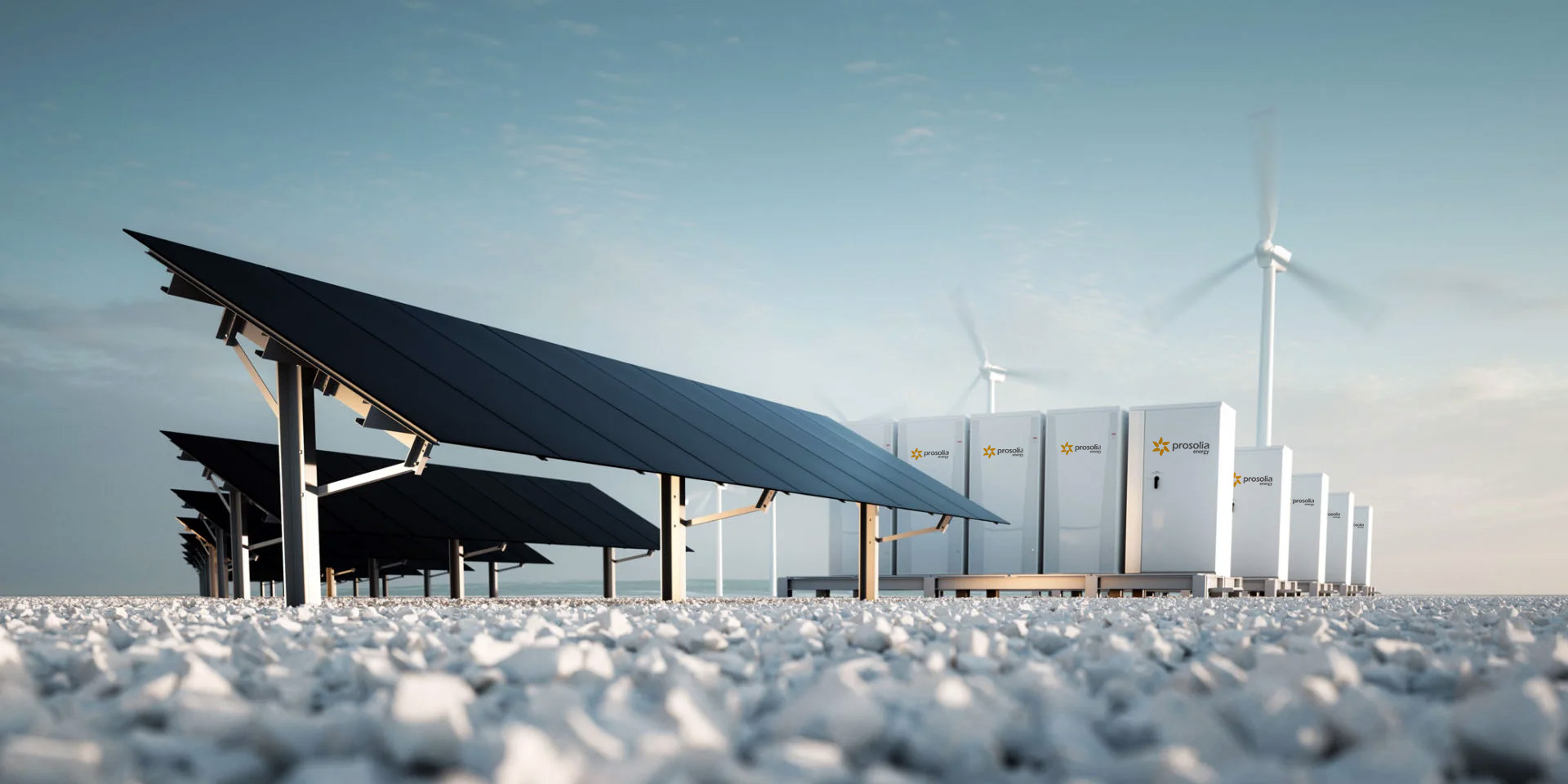
Adding a storage system to a hybrid plant introduces a third layer that changes how the whole system behaves. Instead of relying purely on the moment-to-moment complementarity between solar and wind, a hybrid storage system captures the surplus generated when both technologies are producing at once (a fairly common occurrence given their different curves) and releases that stored energy during the periods when neither is generating enough to cover demand.
Without that storage layer, that surplus is simply lost: if the plant generates more energy than it can consume or export at a given moment, the excess gets curtailed rather than used. This phenomenon, known as curtailment, is more common than it might seem, precisely in hybrid plants, where solar and wind can end up peaking at the same time. Storage, in that sense, is what prevents throwing away energy that has already been generated.
In practice, this means the plant’s energy flow stops being a direct pass-through from generation to consumption and starts working as an actively managed buffer: energy is stored when there’s a surplus and released when it’s needed. Generation and consumption are decoupled from the exact moment of production, which is precisely what allows a hybrid plant to smooth out the residual gaps that solar-wind complementarity alone doesn’t fully close.
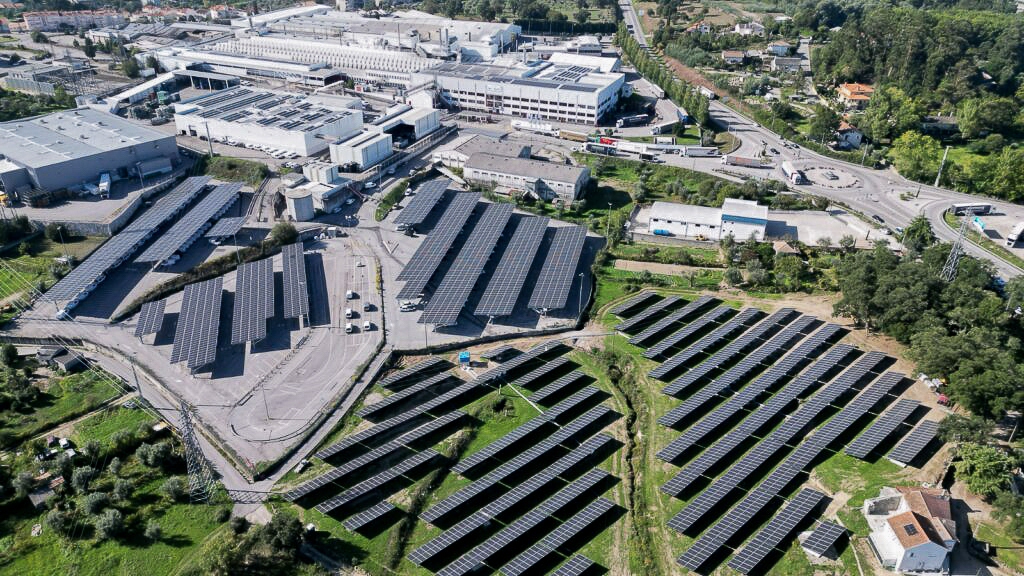
One example of this system in operation is Albispark, a 34.4 MWp solar plant that evolved into a hybrid project by integrating a 15 MW / 60 MWh BESS, combining renewable generation with the capacity to store and manage that energy.
The logic behind the energy management systems that make this buffer possible (predictive dispatch, peak shaving, energy arbitrage) is covered in detail in our article on energy flexibility. What matters for this discussion is that storage is what turns a hybrid generation system into a hybrid energy system: one where the combination of technologies is actively coordinated, rather than simply co-located.
Why hybridization matters for grid connection and long-term planning
Grid connection capacity is a limited, and increasingly contested, resource. Every generation asset connected to the electrical grid needs an access point with an assigned capacity, and in many regions those access points are becoming harder and slower to secure as demand for new renewable connections grows.
This is where hybridization offers a structural advantage that goes beyond generation performance. A plant that already has a solar installation and an existing connection point doesn’t need to apply for a new one when it adds wind generation or a battery system — it optimizes the capacity it already holds. Evacuating energy from multiple technologies through a single, shared connection point is generally more efficient than developing each asset separately and competing for independent grid access, which in some markets can mean years of difference in commissioning timelines.
For an industrial facility, this turns hybridization into a long-term planning decision as much as an engineering one. It requires management systems capable of coordinating multiple generation sources and, often, storage, all behind the same connection point, which is why hybridization projects tend to benefit from being designed and executed by a single technical party responsible for the full system, from generation and storage integration through to grid connection and ongoing operation, rather than assembled piecemeal from separate suppliers. It’s the approach we’ve applied, for example, in our distributed generation solutions, where generation, storage and asset management are planned as a single project from the outset.
Is a hybrid model right for your facility?
Whether hybridization makes sense for a given plant isn’t a question with a generic answer — it depends on the site’s existing connection point, its consumption curve, and the local generation profiles available to it. A facility with strong solar self-consumption and spare capacity at its access point is in a very different position from one starting from scratch.
What the technical case does show is that hybridization addresses a real structural limitation of single-technology plants: exposure to one generation profile, and increasingly, exposure to constrained grid access. Assessing whether that case applies to a specific facility starts with evaluating its actual connection point and demand pattern, in line with what we’ve covered on energy storage.
It’s worth saying plainly: hybridizing isn’t simply “adding” one technology to another. Designing and coordinating multiple generation sources and storage behind the same connection point adds engineering and day-to-day operational complexity, and can extend permitting timelines if the project involves expanding or modifying an existing access permit. That complexity doesn’t invalidate the technical case for hybridization, but it does explain why not every plant hybridizes at the same pace, and why it’s worth approaching as a serious engineering project rather than a simple extension of an existing installation.
Conclusion
Hybridization doesn’t solve an industrial plant’s energy problem on its own, but it does correct a structural weakness at the root: dependence on a single technology and a single weather condition. Combining solar and wind generation, adding storage where it makes sense, and optimizing an existing connection point are pieces of the same decision, not independent projects. As industrial electrification advances and grid access becomes scarcer, that way of approaching energy as an integrated system rather than a sum of separate installations will likely stop being one option among others and become the default starting point.

Lorena García is Global Head of Marketing at Prosolia Energy Group, where she develops and implements the company’s global Marketing strategy across six countries: Spain, France, Portugal, Italy, Germany, and Mexico. With experience in the renewable energy sector, she works on the creation of technical and specialised content focused on the energy transition, decarbonisation, sustainability, and innovation in the energy sector.