
For industrial companies purchasing large volumes of electricity, a corporate Power Purchase Agreement (PPA) can support renewable sourcing and longer-term cost visibility. It also determines how price, volume, profile and credit risks are shared between the buyer and producer.
Comparing different types of power purchase agreements therefore means looking beyond the quoted price.
At Prosolia Energy, On-site, Near-site and Virtual PPA models are particularly relevant for industrial consumers. When comparing corporate PPA structures more broadly, it is also useful to distinguish a physical Off-site PPA:
- On-site PPA — renewable generation at the industrial site.
- Near-site PPA — a nearby renewable plant connected directly to the customer through a private line.
- Physical Off-site PPA — renewable electricity is contracted from an external asset and delivered through the public grid.
- Virtual PPA — a financial agreement with a renewable producer, without physical delivery from the project to the facility.
The right PPA structure depends on the company’s consumption profile, the location and connection of the renewable asset, and how it wants to allocate price, volume and supply risks over time.
On-site, near-site, off-site and virtual PPAs: what actually changes
On-site and private-line Near-site PPAs involve direct physical supply, while a physical Off-site PPA uses the public grid for delivery. A Virtual PPA is financially settled and the company’s physical electricity supply remains separate. In each case, the corporate buyer is commonly referred to as the offtaker.
On-site PPA: when the industrial site can host the generation
An On-site PPA is a physical PPA with generation installed at the customer’s facility, supplying electricity for consumption on site.
In producer-owned On-site PPAs, the producer develops, finances and operates the installation, while the energy purchase terms – including volumes and delivery profile – are defined in the contract. Prosolia Energy applies this model in its On-site projects.
Suitable roofs, car parks or land provide the space; the load profile determines how much generation can be used directly. When on-site generation does not fully meet demand, the company’s other electricity supply arrangements cover the shortfall.
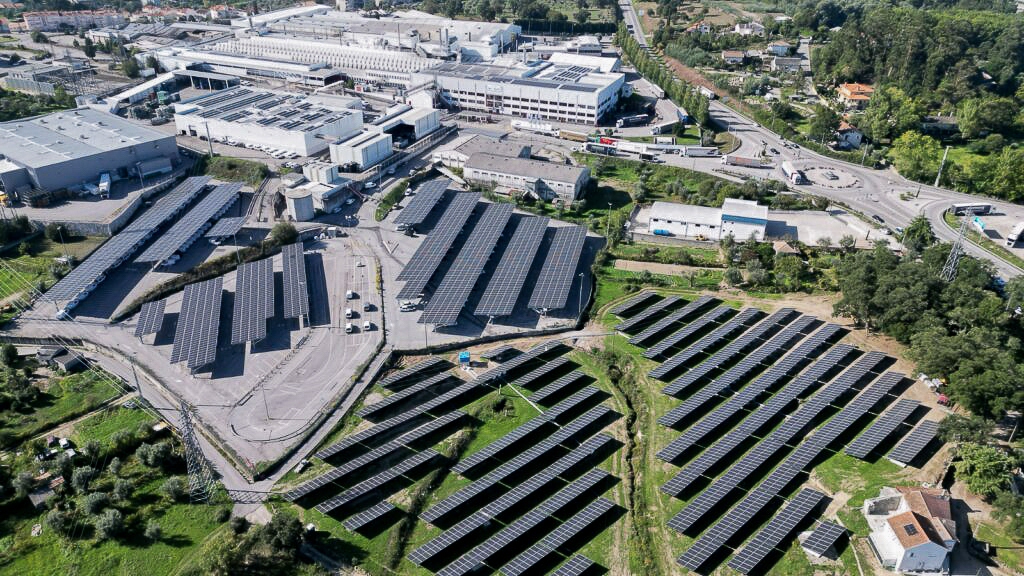
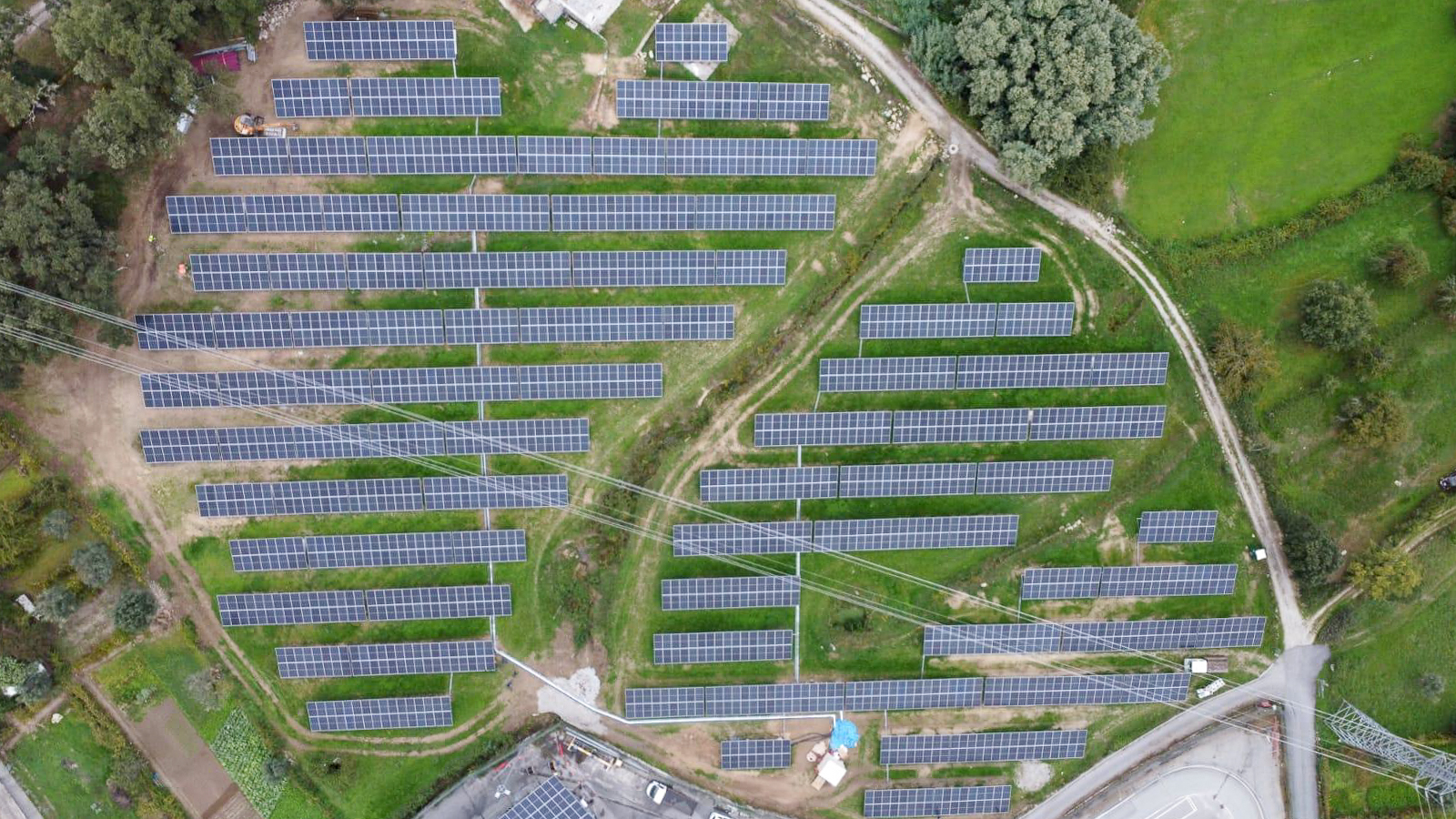
At Stellantis in Mangualde, Portugal, Prosolia financed, built and operates a solar installation under a PPA, combining rooftop, carport and ground-mounted systems.
Near-site PPA: when electricity demand is greater than the space available
High electricity demand does not always come with enough on-site space.
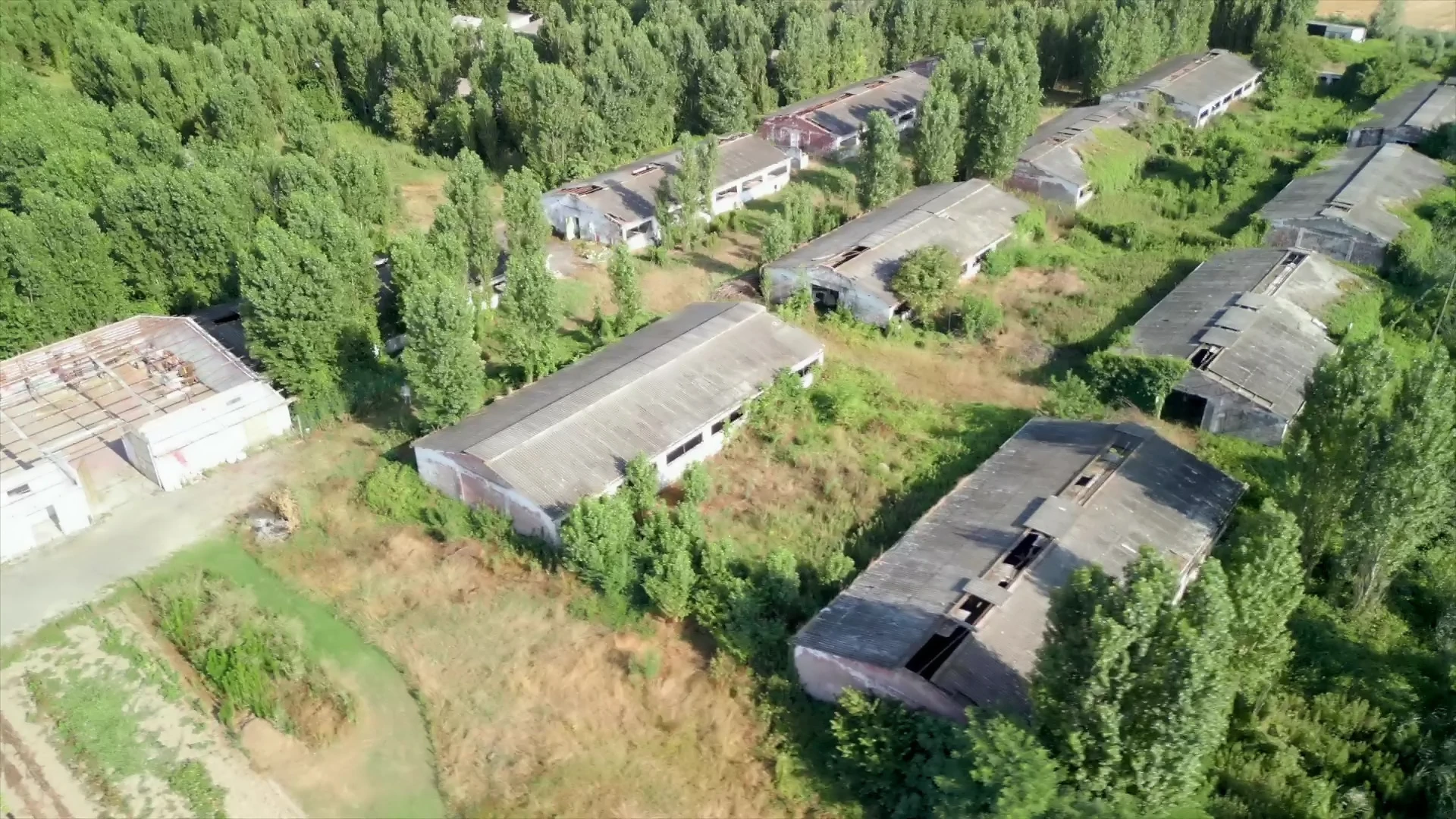
A Near-site PPA with a private-line connection is a physical supply arrangement in which a dedicated renewable plant is developed outside, but close to, the industrial facility and connected directly to the customer’s electricity infrastructure.
This extends the potential for renewable generation beyond the factory’s boundaries. Available land, the site’s load profile and connection feasibility determine the project’s potential, subject to local permitting and connection requirements.
Physical off-site PPA: delivery through the public grid
In a physical off-site PPA, the renewable asset is located away from the customer’s premises and the electricity is contractually delivered through the public grid rather than through a dedicated private line.
The agreement defines the commercial terms of the physical supply, including the contracted price, volume, delivery arrangements and duration. This allows an industrial buyer to contract renewable electricity from an external asset even when developing generation at or close to the consumption site is not the preferred option.
A sleeved PPA is a common form of physical off-site PPA in which a licensed utility or energy supplier acts as an intermediary between the renewable producer and the corporate buyer, facilitating delivery through the grid and typically managing services such as balancing, settlement and billing.
The exact allocation of these responsibilities — and the associated costs — depends on the contractual structure agreed between the producer, the buyer and the intermediary.
Virtual PPA: managing market exposure without physical delivery
A Virtual PPA (VPPA) separates the financial agreement from the company’s physical electricity supply.
In a typical fixed-price VPPA, the producer sells electricity into the market. Buyer and producer settle the difference between an agreed price and a reference market price for the contracted volume. The buyer receives the difference when the reference price is higher and pays it when it is lower.
The company continues purchasing electricity through its existing supply arrangements. The VPPA can help hedge that procurement exposure when the relevant prices and volumes align. The risks section below explains why that alignment matters.
On-site, near-site, off-site or virtual: which structure fits which need?
There is no single PPA structure that fits every industrial consumer.
| BUSINESS SITUATION | STRUCTURE TO EVALUATE |
|---|---|
| Suitable on-site space and demand that can absorb local generation | On-site PPA |
| High demand, limited on-site space and a feasible nearby connection | Near-site PPA |
| Renewable electricity supplied from an external asset through the public grid | Physical Off-site PPA |
| Financial price hedging without delivery from the renewable project | Virtual PPA |
Two companies with similar annual consumption can reach different conclusions because their load profiles, locations and procurement strategies differ. PPA type alone does not determine risk allocation; pricing, volume and delivery terms also matter.
Matching contract structure to your risk profile
The PPA model does not determine the entire risk allocation. Price formulas, volume commitments and delivery or settlement profiles are equally important.
Price risk. A fixed-price PPA gives the buyer visibility over the agreed energy price for contracted volumes, while providing the producer with greater revenue certainty per unit sold. The buyer gains protection against price increases on that portion but does not automatically benefit from lower market prices. An indexed price retains exposure to the specified index.
Volume risk. Under a pay-as-produced arrangement, contracted volumes follow actual output. Lower generation can mean less revenue for the producer and more replacement purchases for a physical buyer. If the seller instead commits to firm delivery, responsibility for supplying shortfalls shifts to the seller under the agreed terms. A buyer’s changing demand also affects the appropriate contracted volume.
Profile risk. Timing matters as well as total output. Generation concentrated in lower-price hours may not offset purchases during higher-price hours. This matters for physical procurement and VPPA hedges; contract terms establish who manages that mismatch. Hybrid energy systems can diversify generation profiles, while energy flexibility can help align demand with available output, where operations permit.
Basis risk. Particularly relevant to VPPAs, this arises when the settlement reference price differs from the price exposure being hedged. If the two move differently, settlement payments may not offset changes in the buyer’s electricity costs. It is not a risk exclusive to virtual contracts.
Credit risk. Either party may fail to meet payment or other contractual obligations. Assessing counterparty strength and agreeing appropriate security arrangements matters across PPA structures.
Why the PPA price should not be the only comparison
Two PPAs with the same headline price can leave the buyer with different total costs and risk exposure.
Compare the contracted volumes, expected generation profile, residual electricity purchases and any additional delivery or balancing costs. For a VPPA, assess settlement cash flows alongside the physical supply bill.
Contract duration, or tenor, matters too. A longer fixed-price term extends price predictability but also the commitment. Over the life of a PPA, changes in production levels, electrification, energy efficiency measures or other business developments can alter the company’s electricity demand. Contractual flexibility is therefore separate from pricing: buyers should assess whether volumes or other terms can be adjusted, under what conditions and at what cost. Renegotiation should not be assumed.
The useful comparison is total energy procurement cost and exposure with and without the PPA, across different price and consumption scenarios.
Why the producer matters as much as the contract type
A contractual commitment is only useful if the counterparty can fulfil it. Project financing capability, delivery experience and the operation and maintenance (O&M) track record therefore belong in the assessment alongside commercial terms.
As an independent power producer (IPP), Prosolia Energy develops, finances, builds and operates renewable projects, bringing project delivery and long-term operation into the same discussion as PPA structure.
Start with the energy profile, then structure the PPA
Start with your load profile, available space, connection options, existing supply arrangements and the share of consumption or price exposure you want to address. Then compare structures against those requirements.
A corporate PPA can complement conventional supply by linking procurement to a specific renewable asset and establishing longer-term pricing terms. Renewable-electricity and associated emissions claims depend on the relevant environmental attributes being transferred to the buyer — including Guarantees of Origin (GOs) in Europe — and cancelled or retired as required under the applicable reporting framework.
Your energy profile should define your PPA — not the other way around.
Talk to our team about which PPA structure could fit your consumption profile, procurement objectives and risk priorities.
Let’s discuss your PPA strategy!

Lorena García is Global Head of Marketing at Prosolia Energy Group, where she develops and implements the company’s global Marketing strategy across six countries: Spain, France, Portugal, Italy, Germany, and Mexico. With experience in the renewable energy sector, she works on the creation of technical and specialised content focused on the energy transition, decarbonisation, sustainability, and innovation in the energy sector.