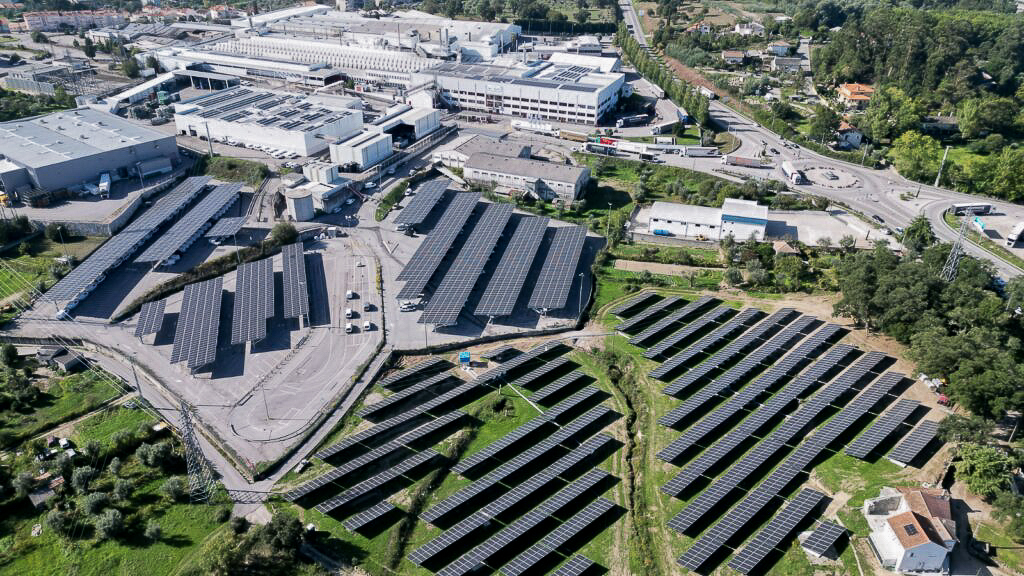
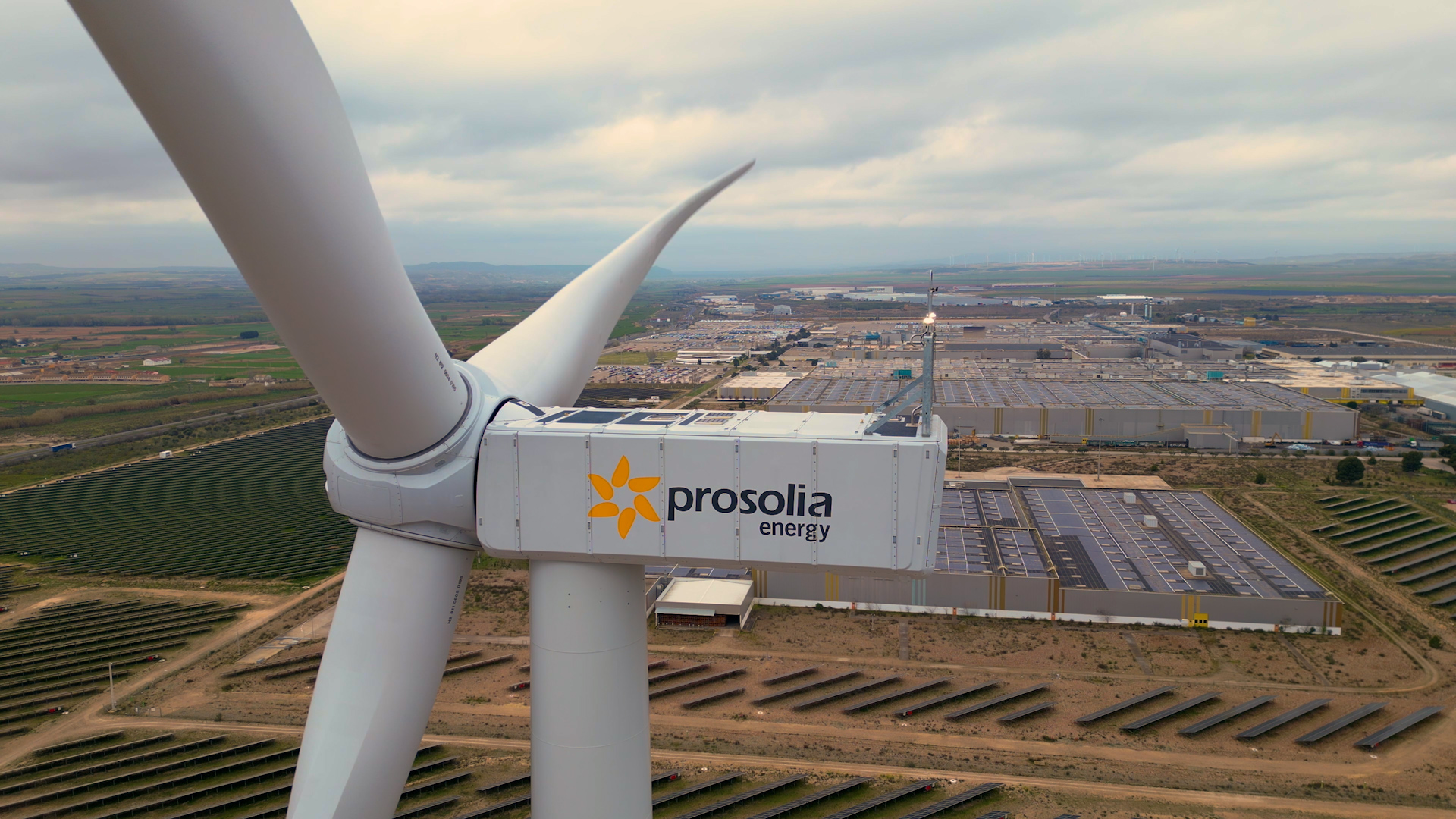
Until fairly recently, batteries on an industrial site were mostly there as backup: a UPS that kept critical systems running for a few minutes if the supply failed. Today battery energy storage systems (BESS) can lower the electricity bill, make better use of solar production, manage demand peaks and relieve a grid connection that is close to its limit. The question is no longer whether storage works, but under what conditions it adds economic and operational value to your plant as part of its industrial self-consumption and decarbonisation strategy.
What is a battery energy storage system (BESS)?
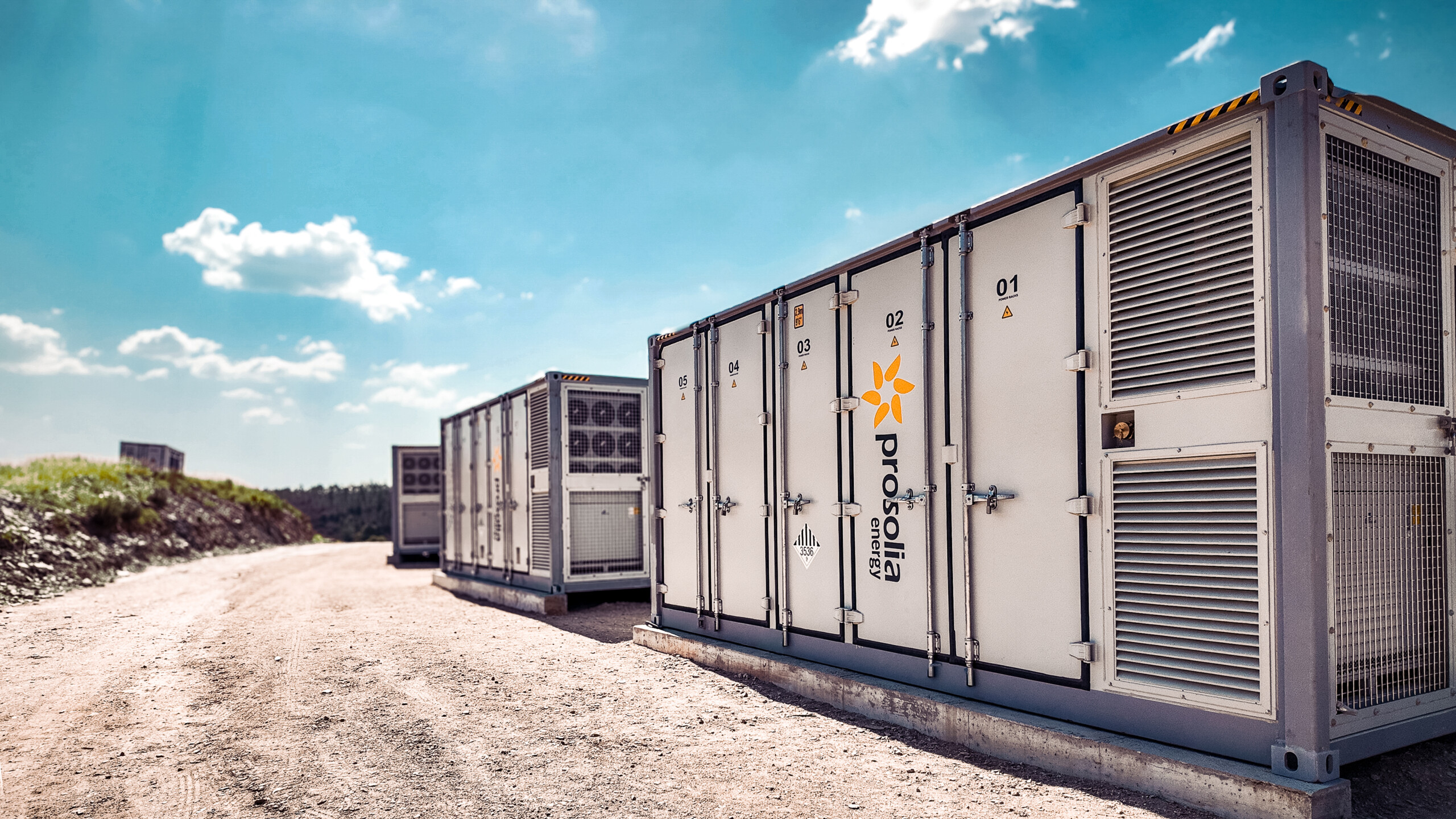
A BESS (battery energy storage system) stores electricity so it can be used when the site needs it. Besides the battery modules, it includes a battery management system (BMS) that monitors and protects the cells, the power electronics (PCS) that convert direct current into alternating current and back, and an energy management system (EMS) that decides when to charge and when to discharge based on the plant’s needs and electricity market conditions. On an industrial site, battery energy storage systems charge from the grid or from on-site generation, mainly solar, and discharge when it makes most sense, for example during demand peaks or when solar output drops. This way the plant shifts part of its consumption in time without changing how it produces.
Two figures are needed to size any system: power, in MW, tells you the rate at which the battery can deliver or absorb energy, and capacity, in MWh, how much it can store. Dividing capacity by power gives the duration. Cutting a short peak needs a lot of power for a short time, while moving midday solar surplus to the evening needs several hours of capacity.
Why storage is now at the centre of the energy debate
The growth of solar has changed how electricity prices behave during the day. Solar generation is concentrated around midday and pushes prices down in those hours, while prices rise sharply in the evening as output falls. That spread is an opportunity for large industrial consumers with high round-the-clock demand, especially those that already have a renewable PPA: with a battery, they can charge in the cheapest hours and shift that energy to the evening and night, reducing their exposure to the most expensive periods.
Installations have grown accordingly: BloombergNEF estimates that 112 GW / 307 GWh of batteries were installed worldwide in 2025, 48% more than the year before. Most of this capacity is utility-scale, but the same price signals also reach industrial consumers [1] .
Is battery energy storage worth it for business? Signals that the case is getting stronger
The answer depends on each site: each signal in a company’s own data points to a different source of value and places different demands on the battery.
| Signal in your data | What the battery does | What the system needs |
| Short peaks that raise maximum recorded demand or trigger penalties | Discharges during peaks to reduce the power drawn from the grid (peak shaving) | High discharge power, enough capacity to cover the peaks and controls that anticipate demand |
| Large, recurring price gaps between hours | Charges when power is cheap and discharges when it is expensive (arbitrage) | Several hours of capacity, high efficiency and a spread that covers losses and degradation |
| Solar surplus exported at low prices or left unused | Stores the surplus for later use (solar shifting) | Capacity in line with the surplus profile and enough charging power |
| Limited grid connection that cannot cover some consumption peaks | Covers demand above the connection limit | Power and capacity sized to the shortfall and its duration |
| Supply interruptions or critical processes that need continuity | Provides backup power during grid outages | Dedicated backup design, reserved capacity and island operation |
Demand charges and contracted power weighing on the bill
In many industrial tariffs, part of the cost depends on the maximum demand recorded and the contracted power needed to cover it. Peaks are usually short, such as a compressor starting up or two lines overlapping at shift change, yet a few minutes can set the power cost for the whole billing period. If the battery discharges at those moments, the load curve flattens. That is peak shaving, and the timing of each discharge is what decides the saving on demand charges.
Price volatility and tariff spreads
When prices differ significantly between time-of-use periods and the pattern repeats every day, the battery can charge in the cheaper hours and supply the plant when energy is more expensive. This load shifting, or arbitrage, pays off when the spread comfortably covers the energy lost in each charge and discharge cycle, as well as battery degradation.
On-site generation surplus and grid constraints
Plants with solar panels often produce more than they need around midday and export the surplus to the grid, where it earns a low price. A battery makes that energy available later in the day, for example during the evening shift. This is known as solar shifting.
Storage also helps when the connection point is holding back the company’s own growth: if added loads occasionally push demand above the available grid access capacity, the battery can cover the difference, avoiding an increase in contracted power. Tervalis’s EV charging stations are a case in point: with a limited grid supply, it is the battery that provides the power the supercharger needs each time a vehicle arrives. Our article on hybrid energy for industry explains how storage fits with other generation technologies behind a single connection point.
The data you need before deciding
A battery should be sized using measured data from the plant, not ratios taken from other sites. Before deciding, it is worth gathering:
- Load profile and shift patterns. The consumption curve at the finest resolution available, since short peaks get lost in averages.
- Tariff and contract. Contracted power by period, how demand charges are calculated and how the energy price is indexed.
- Connection point. Current grid access capacity and any new loads planned, such as electrified heat or vehicle fleets.
- Generation. What is already installed or planned on site, and how much of it is exported today.
With this information, sizing comes out of the analysis instead of being an assumption at the start.
Should your company invest in battery storage now? What to check before taking the step
The projects that perform best combine several sources of value. A battery used only for peak shaving spends much of the day idle, whereas one that also shifts load and stores solar surplus gets far more out of the same investment. The first thing to check is how many of the signals above are present at the site. The second is how solid the business case is: it should still work under conservative assumptions and should not depend on a single uncertain factor, such as a tariff change that may or may not happen.
When it is too early, or not the right fit
If consumption is flat, without significant peaks, and there is little price difference between periods, a battery has little to work with. That is not necessarily final. Conditions change, and a case that looks modest today can become clearly viable after a new production line or an extension of the solar plant.
BESS ROI: how the economics are assessed beyond payback
The return on a battery is calculated by comparing the accumulated net savings with the total cost of the system over its useful life. Capacity degrades with the number of cycles, depth of discharge and operating temperature, so a well-designed project accounts for it through manufacturer warranties, an operating strategy that protects the cells and predictive maintenance as part of the O&M plan. Looking only at the payback period hides these assumptions, and two projects with the same payback can carry very different levels of risk.
Asset ownership is the other key decision. A company that buys the system takes on the performance, maintenance and obsolescence risk and commits capital that could be used in its core business. With a service model, a specialist owns and operates the asset and the risk allocation changes. Prosolia works with a PPA model: the client makes no upfront investment and pays for the energy it uses (€/MWh), while Prosolia owns and operates the system. Our guide to types of PPA for industry explains how each contract structure shares risk between the parties.
Is now the right time to invest in storage at your facility? Your consumption curve, your tariff and your connection point already contain most of the answer. A technical assessment based on that data will show which sources of value are available and which system and investment model suit your company best.
Sources
[1] ESS News. “BloombergNEF confirms energy storage has reached the 100 GW era”. 11 May 2026. https://www.ess-news.com/2026/05/11/bloombergnef-confirms-energy-storage-has-reached-the-100-gw-era/

Lorena García is Global Head of Marketing at Prosolia Energy Group, where she develops and implements the company’s global Marketing strategy across six countries: Spain, France, Portugal, Italy, Germany, and Mexico. With experience in the renewable energy sector, she works on the creation of technical and specialised content focused on the energy transition, decarbonisation, sustainability, and innovation in the energy sector.