
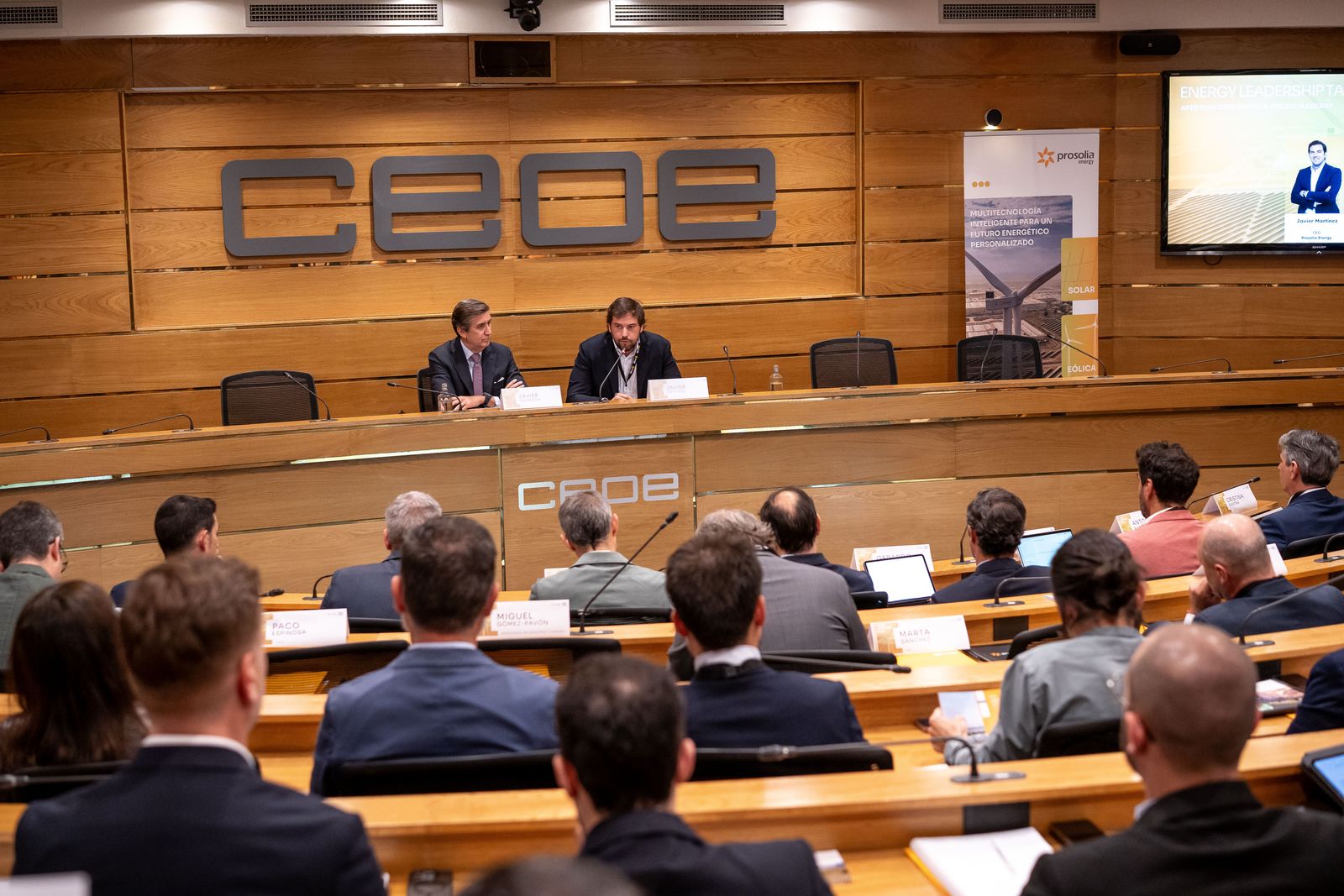
- More than 100 participants, including representatives from the Ministry of Industry, trade associations, and private companies such as automotive giant Stellantis, gathered at CEOE headquarters to discuss the future of industrial energy through 2030.
- The sector calls for regulatory stability to accelerate the deployment of energy storage, which is now seen as central to its competitiveness agenda.
Energy has become a decisive factor for industrial competitiveness in a context marked by price volatility and growing global demand. Hybridization of technologies and energy storage are gaining prominence as key tools to move toward a more resilient and efficient industrial model.
In this context, CEOE and Prosolia Energy brought together over a hundred key players from the business, technology, and institutional spheres in Madrid to discuss the future of industrial energy through 2030.
Participants included representatives from the Ministry of Industry and Tourism, executives from multinational companies such as Stellantis, and representatives from industry associations such as the Association of Energy-Intensive Companies (AEGE) and the Spanish Battery, Energy Storage and Hydrogen Association (AEPIBAL).
Renewables as a Lever for Industrial Competitiveness
The energy system is facing strong growth in electricity demand, expected to increase by 3.6% annually until 2030, according to the International Energy Agency, in a scenario shaped by high geopolitical uncertainty. This combination is creating tensions in energy markets and driving up costs for industry.
In Spain, the challenge is particularly significant: the National Energy and Climate Plan (PNIEC) sets a target of reaching 22.5 GW of storage capacity by 2030, compared to the current situation dominated by pumped hydro (just over 3 GW), with batteries and other technologies still at an early stage of deployment.
The first panel, moderated by Cristina Riesta, Director of Industry at CEOE, explored how industries perceive energy risk and the role of storage in providing stability for both the system and industrial consumers. Speakers included Gerardo Fernández, Partner at Baringa; José Carlos Gil, CEO of Ingeniería Libergia; and Antonio Ramón, Country Manager of Prosolia Energy in Spain.
Panelists stressed that energy storage has evolved from a technical option into a strategic necessity for energy-intensive companies, particularly given the increasing volatility of wholesale electricity markets.
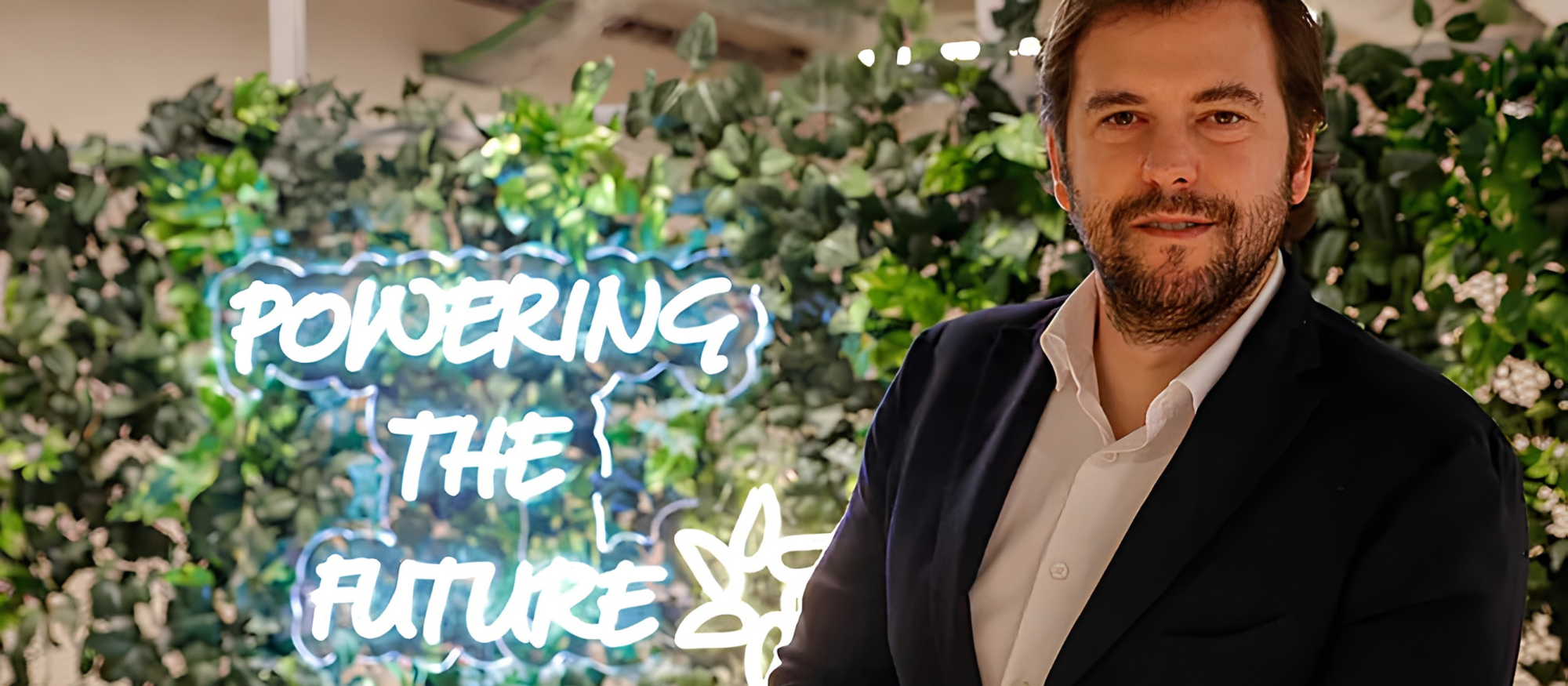
“Industrial companies that do not achieve energy autonomy before 2030 will face a clear competitive disadvantage. Wholesale market volatility is no longer a temporary risk but a structural issue. Storage and hybridization are no longer optional—they are critical infrastructure for any company aiming to remain competitive. This requires medium- and long-term energy planning with a strategic vision,” stated Javier Martínez, CEO of Prosolia Energy.
Energy Hybridization: When Batteries Solve Demand Challenges
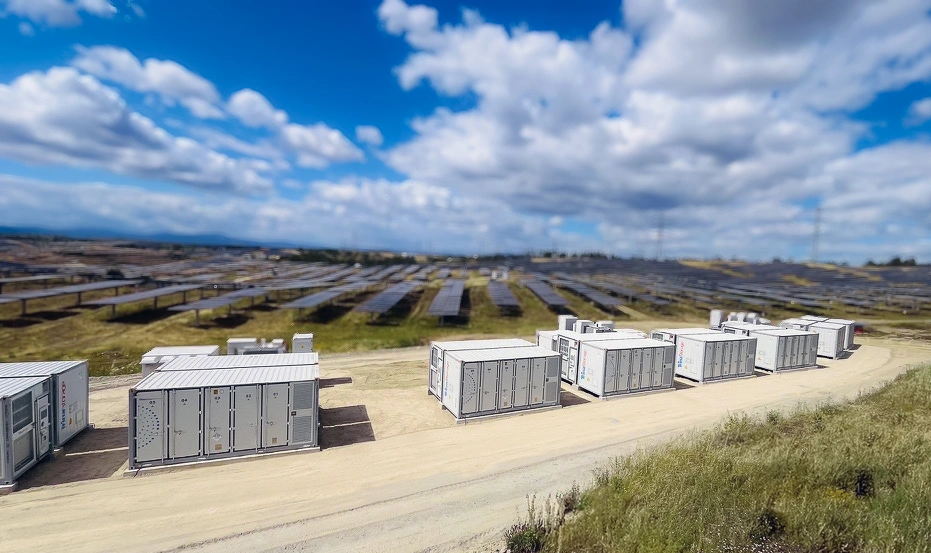
The second panel took a practical approach, analyzing real-world cases of companies adopting hybrid models combining solar and wind generation with battery energy storage systems (BESS) installed on-site.
Moderated by Pedro González, Director General of AEGE, the panel featured Ignacio Cortés, Manager of Stellantis Renewable Electricity; Juan Reinón, Head of Distributed Generation at Prosolia Energy; Andrés Pinilla, BESS Sales Director for Europe & LatAm; and Jesús Mora, Business Developer at Enspired.
The Stellantis Group stands out as one of the most representative cases. In partnership with Prosolia Energy as a strategic partner, it has deployed multi-energy renewable solutions that allow it to cover up to 80% of its plants’ energy demand and significantly increase energy autonomy.
Another key point highlighted was the advancement of financing models with no upfront investment, enabling companies to adopt these technologies without impacting their balance sheet. This model is accelerating the adoption of storage solutions in industrial environments.
Regulation: A Key Factor in Advancing the Energy Transition
The third panel focused on the regulatory framework. Moderated by Paco Espinosa, Director of ACE, it brought together Miguel Gómez-Pavón, Deputy Director General for Industrial Strategy at the Ministry of Industry and Tourism; Luis Marquina, President of AEPIBAL; and Marta Sánchez, Energy Partner at EY.
The discussion highlighted administrative, operational, and market barriers slowing investment in battery projects, limiting their participation in flexibility markets, and increasing grid congestion risks. The importance of strengthening industrial capabilities to enhance Spain and Europe’s strategic autonomy was also emphasized.
“We have the technology, proven success cases, and growing industrial demand that can no longer wait. Today, companies are not only looking to reduce costs but also to gain stability and greater control over their energy supply. What we need now is a regulatory framework aligned with this reality—one that provides certainty and ensures legal security,” stated Juan Carlos Guaita, Chairman of Prosolia Energy.
About Prosolia Energy
Founded in 2003, Prosolia Energy is an Independent Power Producer (IPP) specializing in providing solutions to help clients transform their energy model toward decarbonization and enhance competitiveness.
With a strong presence in Spain, Portugal, France, Italy, Germany, and more recently Mexico, the company focuses on industrial self-consumption projects and renewable energy generation for grid supply. It currently has a project pipeline exceeding 4 GW in development across Europe.