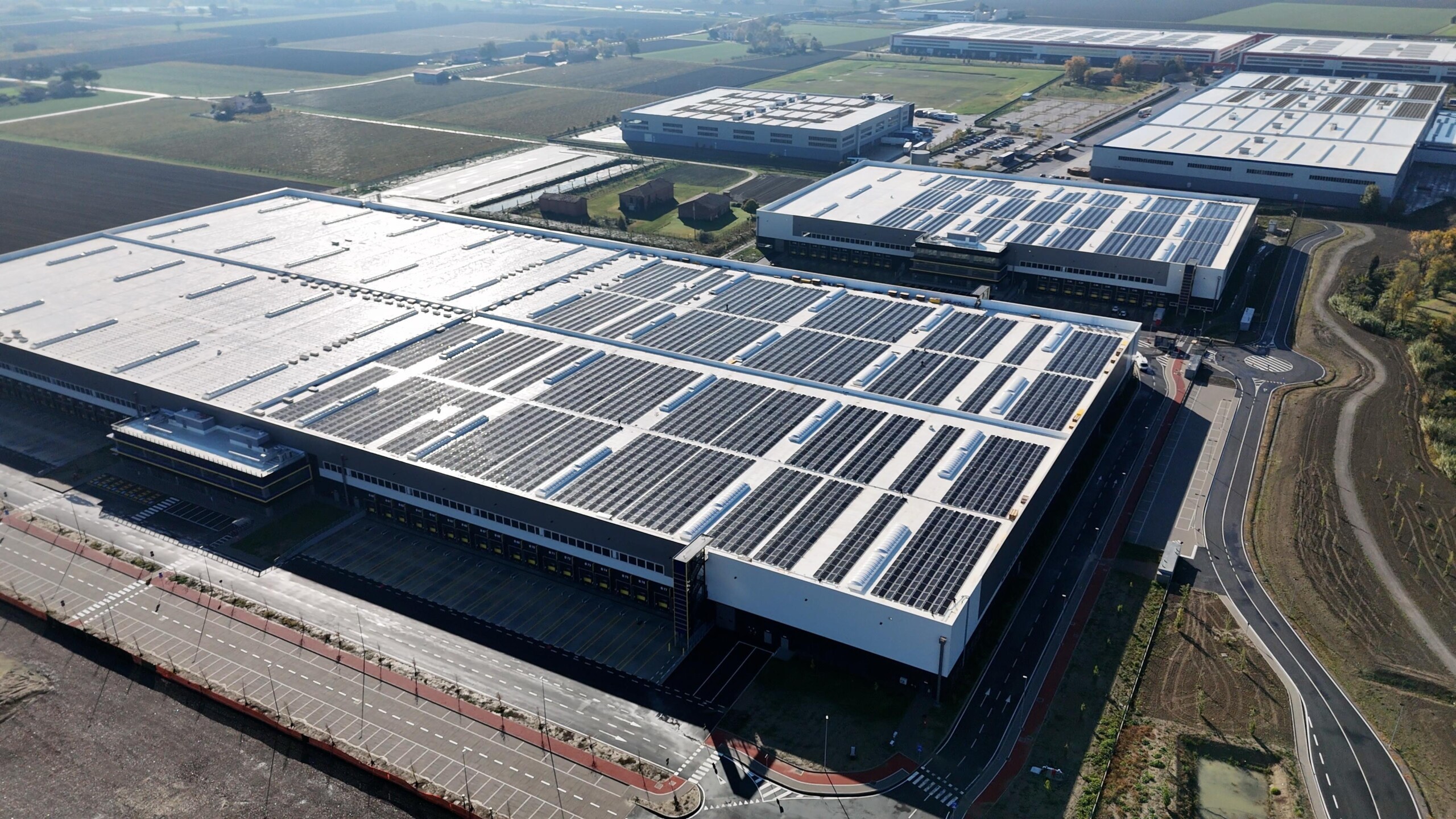


The large-scale retail sector is one of the most energy-intensive industries. Thanks to this agreement, seven supermarkets will generate nearly 1 MWp of clean energy without any further land consumption: the photovoltaic modules will be installed on roofs and parking carports.
Prosolia Energy, a leading European Independent Power Producer (IPP), and Coop Reno, one of Northern Italy’s most prominent consumer cooperatives, have expanded their strategic partnership to supply renewable energy to seven supermarkets across the Emilia-Romagna region through long-term Power Purchase Agreements (PPAs).
With a total installed capacity approaching 1 MWp, the portfolio enables Coop Reno to transform its commercial infrastructure into strategic energy assets. This initiative will drive competitiveness, improve operational efficiency, and strengthen the energy independence of its stores, while actively supporting the goals of Italy’s Integrated National Energy and Climate Plan (PNIEC).
CLEAN ENERGY ON ROOFS, WITH ZERO UPFRONT INVESTMENT
The collaboration between the two companies began in 2024 with the development of the first self-consumption photovoltaic projects at the Coop supermarkets in Castel Guelfo di Bologna and Ponte Rivabella. Following the success of this initial phase, the partnership has now been extended to five additional locations: Bagnara di Romagna, Casalfiumanese, Riolo Terme, Silla di Gaggio Montano, and Renazzo di Cento.
Structured under 15-year PPA contracts, the projects combine rooftop installations and photovoltaic carports, maximizing the use of existing commercial infrastructure. This approach not only allows Coop Reno to access renewable electricity at competitive prices with zero upfront capital expenditure (zero-CAPEX), but also enhances the customer shopping experience by providing shaded parking areas while generating clean energy on-site.
From an environmental perspective, the consolidated portfolio of solar projects, which now reaches a total of 784.92 kWp, will actively avoid the emission of approximately 210 tons of CO2 per year. Over the entire lifespan of the PPA agreements, this translates to more than 3,150 tons of mitigated carbon emissions.
A WIN-WIN SYNERGY FOR THE ENERGY TRANSITION
Graziano Cucciolini, Country Manager of Prosolia Energy in Italy, commented: “This strategic partnership perfectly reflects the type of relationship that Prosolia Energy aims to build with leading players in the Italian Large-Scale Retail and Consumer sectors: a long-term collaboration where we work in synergy to transform existing infrastructure into energy assets capable of driving business competitiveness. The decision by a key partner like Coop Reno to renew and expand its trust in our PPA model provides the strongest validation that we are building something distinctive and enduring in the Italian market.”
“With nearly 1 MWp developed across supermarkets in Emilia-Romagna, we are demonstrating that our model—which requires no operational burden or capital investment from the client while ensuring long-term price certainty—is exactly what the retail sector needs to navigate the energy transition required by the PNIEC. We look forward to continuing our growth journey alongside Coop Reno,” he added.
Andrea Mascherini, President of Coop Reno, stated: “In a landscape where businesses increasingly face energy challenges driven by geopolitical crises, this partnership with Prosolia Energy represents a fundamental strategic choice for the future of Coop Reno. Clean energy, capped prices independent of market fluctuations, and enhanced comfort for customers shopping at our supermarkets—all achieved without further land consumption by utilizing existing spaces like parking lots or building roofs. To use a food metaphor close to our hearts, these are the perfect ingredients for a ‘recipe’ that is healthy from every perspective: economic, environmental, and social.”
A SCALABLE MODEL FOR AN ENERGY-INTENSIVE SECTOR
Large-scale retail represents one of the most energy-intensive sectors in Italy. According to data provided by ENEA (the Italian National Agency for New Technologies, Energy and Sustainable Economic Development), commercial spaces in the grocery retail sector consume an average of 219 kWh per square meter annually, with approximately 95% of this demand directly linked to electricity consumption for refrigeration, HVAC systems, and lighting. This structural dependence on energy markets leaves the sector particularly exposed to price volatility, while simultaneously creating significant optimization opportunities through distributed renewable generation.
At the same time, decentralized self-generation is rapidly evolving from a voluntary ESG initiative into a regulatory requirement. Italy’s Integrated National Energy and Climate Plan (PNIEC), promoted by the Ministry of Environment and Energy Security (MASE), demands an acceleration of energy retrofits and a substantial increase in on-site renewable generation for large commercial facilities.